
Why SMEs Delay Strategy — and Why That’s a Mistake
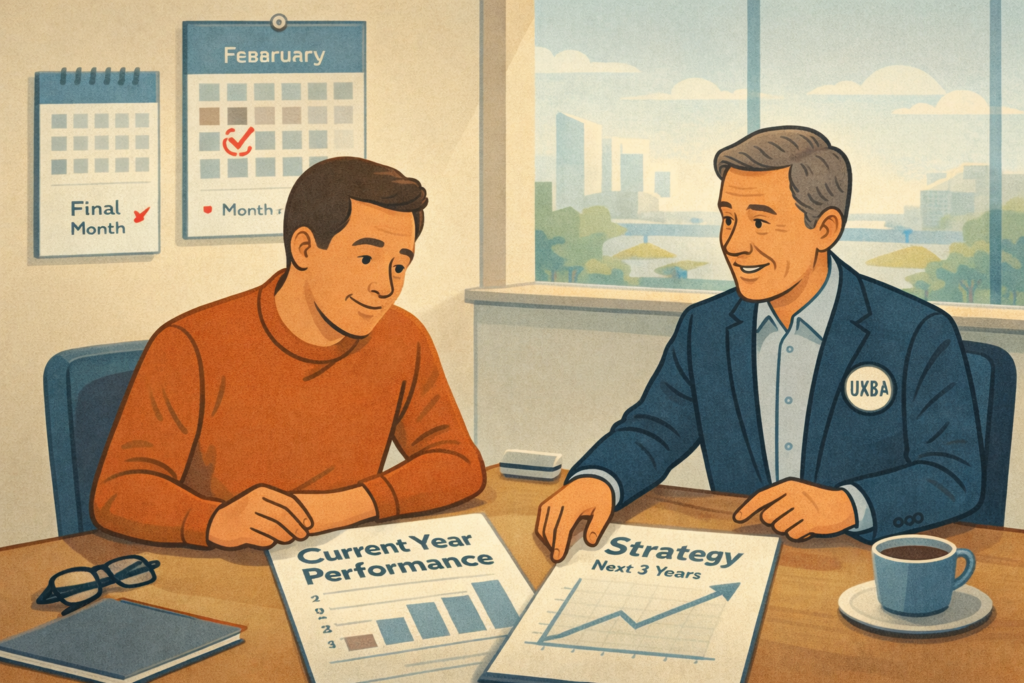
I have always believed that February is the most important month of the year – and not just because it contains my birthday, my wife’s birthday and our wedding anniversary. February matters because for many SMEs the most popular accounting year end is 31 March, and the final months of the financial year provide the ideal moment to stop, take stock, and think properly about strategic direction.
Too often, strategy is treated as something to be dealt with “once the year has finished”. In reality, many businesses only start talking about strategy once the new financial year is already underway. By the time directors and shareholders focus on it properly, the first quarter has gone – which is rather like planning your route after you’ve missed the turning.
Strategy vs Business Planning: Understanding the Difference
This distinction still causes confusion in many growing businesses:
- A Strategic Plan focuses on the medium to long term:
- Direction and positioning of the business
- Growth ambitions (organic and acquisitive)
- Market opportunities and threats
- People, systems, and capability requirements
- Exit planning, succession, or partial disposals
- A Business Plan is shorter term and more operational:
- Profit forecasts and margins
- Cash flow and funding requirements
- Cost control and investment plans
- Targets for the next 12–24 months
Both matter. But one sets the destination, while the other works out how much fuel you have.
Why the Penultimate Month Is the Strategic Sweet Spot
The penultimate month of the accounting year – whether that is February, May, November or otherwise – is often the best time to think strategically.
By this stage:
- You should have a clear view of likely year-end results
- Tactical actions can still influence the final outcome
- Forecasts for the coming year are based on reality, not hope
For example, an SME may consider:
- Accelerating capital investment or major repairs
- Reviewing pension contributions or remuneration planning
- Bringing forward expenditure to manage tax efficiently
- Reassessing funding arrangements ahead of renewal discussions
These are not just financial decisions. They directly affect capacity, risk appetite, and future growth.
Using Year-End Performance to Shape Future Growth
Once you understand where the current year is likely to land, the next question is obvious: what does this mean for where the business is going?
This is the right time to:
- Review performance against the existing 3– or 5–year strategy
- Challenge whether original assumptions still hold
- Decide whether growth plans need refining or accelerating
- Identify constraints that could limit progress
In many SMEs, this is also the point where conversations about leadership capacity, management structure, and shareholder alignment become unavoidable – and rightly so.
Strategic Planning for SMEs in an Uncertain Economy
In uncertain economic conditions as we are now, strategic planning becomes even more important, not less.
A strong SME strategy should be:
- Clear, but adaptable
- Commercial, not aspirational fantasy
- Flexible, with contingency options
- Owned, not just written
The aim is not to predict the future perfectly, but to ensure the business can respond intelligently when conditions change.
Making Strategy a Routine Discipline, Not a Year-End Panic
Whatever your accounting year end, the message is simple:
- Treat the final months of the year as your Strategy and Planning window
- Build it into the board agenda every year
- Use actual performance data, not early-year guesswork
The best SME strategies are not rushed together once the new year has started. They are shaped thoughtfully, with clarity about where the business really stands and where it genuinely wants to go.
And if that happens to be February – well, it has always been a very sensible month.