
Your business is established. You have loyal customers, a capable team and a marketing budget. But are you confident your marketing is bringing in enough of the right enquiries?
Perhaps you are spending more on advertising without seeing better results. Your website attracts visitors but few new customers. Or your team is busy producing content without understanding what it contributes to sales. There is no shortage of marketing advice. Google, YouTube, LinkedIn and AI can all provide answers in seconds. Accountants, business contacts and consultants offer different perspectives.
The challenge is knowing which advice is right for your business and what to do with it.
Three recent studies offer some useful insights into how UK business owners seek advice and why experienced human judgement still matters.
Marketing Advice Is Readily Available. So Why Is It Hard to Make Progress?
The Department for Business and Trade’s Longitudinal Small Business Survey, published in September 2025, found that marketing was the second most common reason for businesses without employees to seek external advice.
Among those seeking help, 22% cited marketing, compared with 15% the previous year. Yet only 17% of businesses without employees had sought any external information or advice in the preceding year.
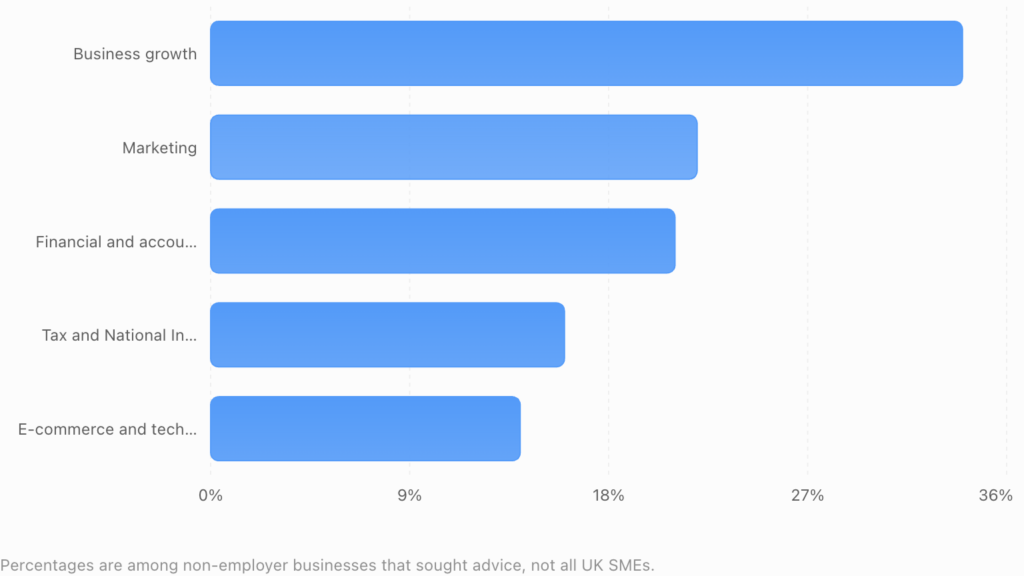
Chart 1: What businesses seek advice about
These findings concern the smallest businesses, but they raise a question relevant to established SMEs too. Are you getting the advice your business needs, or simply relying on the information that is easiest to find?
As a business grows, marketing decisions become more complicated. The question is no longer simply how to attract attention. It is how to choose the right customers, communicate a compelling offer and turn marketing investment into profitable sales.
Where Do Business Owners Look for Advice?
Research commissioned by Worldpay and reported in September 2025 surveyed 1,250 UK SME owners.
It found that business owners use a wide range of sources for guidance:
- 93% turn to friends, family and trusted contacts
- 53% use AI tools such as ChatGPT
- 51% use YouTube
- 47% use conventional search engines
- 41% use LinkedIn
Respondents could select more than one source.
These figures measure general business guidance rather than marketing advice alone. Nevertheless, they illustrate how readily available information has become.
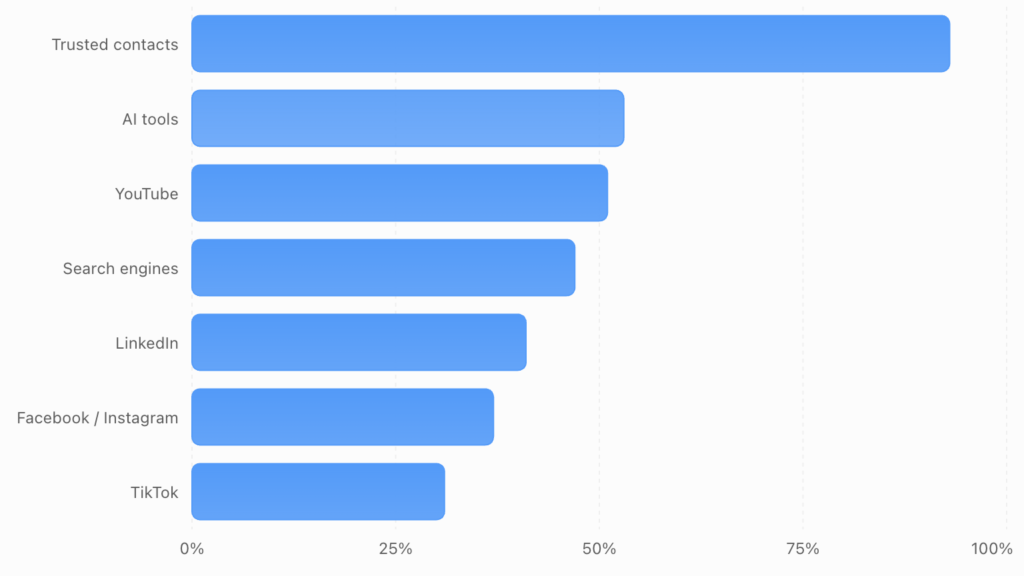
Chart 2: Where owners find guidance
Owners are not choosing one source. They are combining advice from people they trust with online information and increasingly sophisticated digital tools.
That can be helpful. But it also creates a problem.
More information does not necessarily lead to better decisions.
A marketing technique that works brilliantly for a retailer selling directly to consumers may be entirely wrong for an engineering company selling complex products to a handful of major customers.
The question is not whether the advice is good in general. It is whether it is right for your business.
Can AI Help You Make Better Marketing Decisions?
AI is becoming an important source of business guidance.
The Worldpay research found that 53% of SME owners used AI tools for business advice. AI can be particularly useful for researching markets, comparing options, analysing information and developing ideas. It can also help owners challenge assumptions and prepare for conversations with specialists.
But AI has limitations. It does not automatically understand your customers, your competitive position or the commercial constraints facing your business. It may produce convincing recommendations based on incomplete information or assumptions that do not apply to your circumstances.
For established SMEs, the opportunity is to use AI to improve the quality of thinking, not simply to produce more marketing activity.
Before adopting a recommendation, ask:
- What customer problem are we trying to solve?
- What evidence supports this approach?
- How will we measure whether it works?
- What will we stop doing to make room for it?
AI can help explore these questions. Management must still make the decisions.
Why Trusted Business Relationships Still Matter
The American Express Peer Power study, published in March 2026, surveyed 500 UK SME founders and owners.
It found that 83% felt more confident making decisions after speaking with other founders, while 78% said networking had positively affected their businesses.
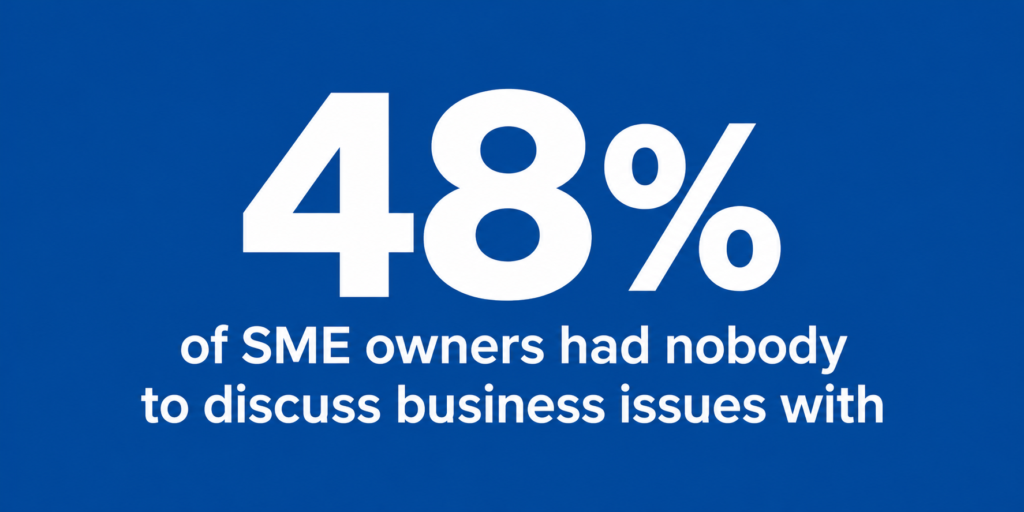
At the same time, 48% said they had nobody with whom they could discuss business issues.
This is an important finding.
Business owners often have colleagues, suppliers and customers around them all day. But that does not necessarily mean they have someone who can challenge their thinking objectively.
An independent adviser brings a different perspective. They can question assumptions, draw on experience from other businesses and help owners distinguish symptoms from underlying problems.
That matters particularly when the business has reached a point where its existing approach to marketing is no longer delivering the results it needs.
Five Sources of Marketing Advice: Which Should You Use?
Each source has a useful role, but none provides every answer.
1. Your Existing Professional Advisers
Accountants and other trusted professionals often know the business well. They can help you understand the financial implications of marketing decisions and may identify areas where specialist support would be useful.
2. Specialist Marketing Consultants
Specialists bring knowledge of particular channels, markets or techniques. They are particularly valuable when you have identified a clear problem, such as poor website conversion, ineffective advertising or weak lead generation.
The important question is whether their expertise matches the problem you need to solve.
3. Other Business Owners and Peer Networks
Owners facing similar challenges can share valuable experience. Peer networks also provide reassurance and challenge.
However, another company’s successful strategy may not work in your market.
4. Online Content and Social Media
Articles, videos and professional discussions provide accessible information. They can help you understand unfamiliar subjects and identify potential solutions.
The challenge is distinguishing relevant advice from generic recommendations and promotional content.
5. AI Tools
AI offers an inexpensive way to research ideas, analyse options and prepare questions.
Its greatest value may come from helping owners make better use of their time and engage more effectively with human specialists.
When Is It Time to Seek Independent Marketing Advice?
You do not need a consultant for every marketing decision.
But independent support may be worthwhile when:
- Marketing expenditure is increasing without a corresponding improvement in sales
- Your business is entering new markets or targeting different customers
- The sales team says it needs more leads, while marketing believes it is delivering them
- You are uncertain which products, services or customers offer the best growth opportunities
- Your management team has competing views about what to do next
These are not simply questions about advertising, websites or social media.
They are business strategy questions.
An experienced adviser can help establish whether the real issue lies in the value proposition, customer targeting, pricing, sales process or marketing execution.
That diagnosis can prevent considerable time and money being spent solving the wrong problem.
Three Questions to Ask Before Spending More on Marketing
Before approving another campaign, appointing an agency or investing in new technology, consider three questions.
- Who are our most valuable customers, and why do they choose us?
Not every customer contributes equally to profit. Understanding who you serve best is the foundation of effective marketing.
- Where are we losing potential sales?
Is the problem attracting attention, generating enquiries, converting prospects or retaining customers? Each requires a different solution.
- What evidence will tell us whether our next investment has worked?
Agree the measures before committing the money. Focus on commercial outcomes, not simply activity.
These questions can help turn marketing from a collection of activities into a more disciplined contributor to business growth.
Better Marketing Starts With Better Questions
The research suggests that business owners have more sources of guidance than ever before.
That is encouraging. But access to information is only the beginning.
As a business grows, the value of good advice increasingly lies in understanding the particular circumstances of the business, challenging assumptions and helping its leaders decide what matters most.
If your marketing is busy but not delivering the commercial results you expect, the next step may not be another campaign. It may be an independent review of what is working, what is not and where to focus next.
UK Business Advisors brings together experienced advisers across marketing, sales, finance, strategy and leadership. An independent conversation can help you identify the real issue and decide on a practical way forward.